
Czech automaker Skoda on Monday forayed into the midsize SUV segment in India with the launch of its new offering Kushaq, priced between Rs 10.5 lakh and Rs 17.6 lakh (ex showroom Delhi).

The government plans to bring down its stake to 26 per cent in these two banks, which are yet to be identified. This may not come in the way of getting investors for these banks, provided the government is willing to step back rather than run them the way it had been doing for over five decades since these banks were nationalised, points out Tamal Bandyopadhyay.

India's budget for the fiscal beginning April focuses on giving a boost to the ongoing economic recovery through a sharp increase in capex spending but is short on major growth-enhancing structural reform announcements, Fitch Ratings said Wednesday. The deficit targets present in the Union budget 2022-23 by Finance Minister Nirmala Sitharaman on Tuesday "are a bit higher than our forecasts when we affirmed India's 'BBB'/Negative sovereign rating in November," said Jeremy Zook, director and primary sovereign analyst for India, Fitch Ratings. While it was widely expected that the fiscal deficit will be lower than the targeted 6.8 per cent of the GDP in the current fiscal year ending March 31, 2022, Sitharaman put the number at 6.9 per cent.

A declining rupee, elevated crude oil prices and sustained foreign fund outflows added to the gloom
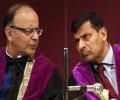
RBI Governor has been under pressure from Finance Ministry.
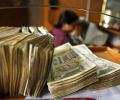
India's current account deficit narrowed sharply to just $300 million

As yields rise, bond prices fall. Higher yields not only translate into losses for investors, it also pushes up borrowing cost for companies as well as government

There was hope in some quarters that the interim Budget would boost sentiment and lay the groundwork for kick-starting the investment cycle, while staying on a path of fiscal consolidation.

The NSE Nifty too ended 58.60 points, or 0.54 per cent, higher at 10,967.30 after shuttling between 10,985.15 and 10,928 during the session.

The dollar-rupee rate could move in the opposite direction if dollar policy rates rise and the FPIs sell in December, says Devangshu Datta.

'While we note the very strong cyclical recovery in the economy, we believe there is still uncertainty over medium-term prospects.'

Low fuel prices to help oil marketing and refining sectors but upstream players will stay under pressure.

Faced with sluggish economic growth and dwindling exports, China on Wednesday devalued its currency for the second consecutive day.

The 30-share Sensex closed down 114 points at 28,622 and the 50-share Nifty ended down 37 points at 8,686.

The Rupee is expected to weaken further against the dollar.
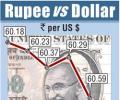
Dealers attributed the fall in the rupee on Tuesday to dollar's gains against other currencies overseas, but a higher opening in the domestic equity market capped the fall.

'There will always be a challenge to maintain a fine balance to ensure that the growth keeps happening and inflation is contained.'
'A strong foreign exchange reserve is the best safety net against global spillovers.'

'India's sizeable foreign exchange reserves should serve as a buffer.'
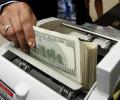
Some type of global shock adds to the allure of the dollar.

Spread investments in equities, bonds, gold and cash to tackle volatility advise Nitin Singh, MD and head, and Vinay Joseph, director, investment strategy, Standard Chartered Wealth Management, India.

'Negotiate a longer agreement with the escalation clause fixed now.' 'This will enable you to control future cost increases.'

The value of the index, adjusted from its all-time high for the relative loss in the rupee's value, is close to sub-10,000 levels.

The aim is a vast improvement in quality that would lead to a surge in demand for low-end Android phones

'While lower steel prices may impact a part of the quarter, this will be offset by softer raw material prices.'

With car penetration of around 22 per 1,000 population, India continues to be a big opportunity to sell cars, especially in rural areas.
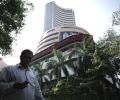
Money flowing into the equity schemes of mutual funds is back at a level last seen before the 2008 financial crisis, when the stock market tanked 60 per cent.

The 30-share Sensex ended down 208 points at 27,057 and the 50-share Nifty closed 59 points lower at 8,094.

It is useful to note that Indian markets have not gone into a tailspin as the Greece crisis has developed, says Devangshu Datta.

ONGC, Sesa Sterlite, Tata Steel, RIL and HDFC emerged as the biggest losers

What's different this time is that global financial stress -- which has its genesis in four policy choices made in recent years -- is juxtaposed with a more resilient real economy, observes Sajjid Z Chinoy, chief India economist at J P Morgan.

The challenge of merging Ranbaxy into the company has not been factored in.

Here's how brokerages across the country are interpreting the exit polls.
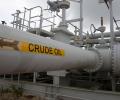
There is positive correlation between crude oil prices and Indian equities and investors can expect more upside after the recent rally in Brent crude price.
.jpg)
The broader consensus was that the Fed would cut the monthly stimulus of $85 billion by $10-15 billion.

Sensex closed over 118 points down on Thursday.

'This is the first time we will see how SIP investors react to market correction.'

The year 2015 may well turn out to be a watershed in global macroeconomic adjustment.

The Delhi Police on Wednesday recreated the scene of crime at the same bylane in northwest Delhi's Shahbad Dairy where 20-year-old Sahil killed a minor girl, officials said.

The World Bank has approved loans totalling $1.75 billion (about Rs 13,834.54 crore) to fund India's PM Ayushman Bharat scheme and private investment to boost the economic growth. Of the total loan, $1 billion will go towards the health sector, while the rest $750 million will be in the form of development policy loan (DPL) to fill the financing gaps through private sector investment in the economy. The World Bank Board of Executive Directors approved two complementary loans of $500 million each to support and enhance India's health sector.
